
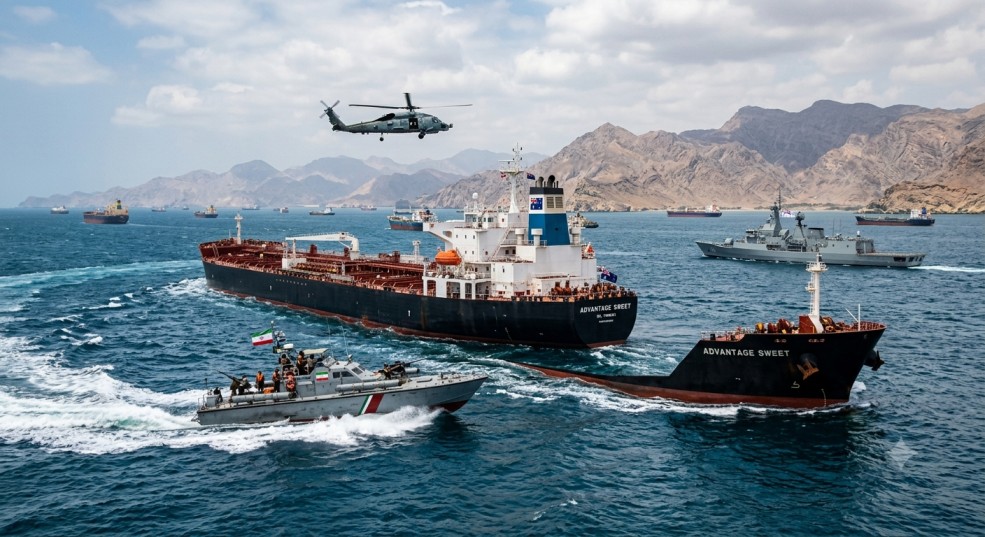
The conflict between the United States and Iran has intensified, with growing military activity around the Strait of Hormuz raising fresh concerns for global energy markets and investors.
According to media reports, the confrontation has expanded to commercial shipping after the United States targeted several Iranian oil tankers, while Iran has claimed attacks against U.S.-linked vessels and other ships travelling through the region. The developments have increased concerns that the strategically important Strait of Hormuz could face further disruption.
Why the Strait of Hormuz Matters
The Strait of Hormuz is one of the world's most important energy chokepoints, connecting the Persian Gulf with global shipping routes. Any prolonged disruption could reduce the availability of crude oil and increase transportation and insurance costs.
Recent estimates cited in media reports indicate that Middle Eastern crude exports in August remained significantly below levels recorded earlier in the year. Although the shortfall had narrowed from the extreme disruption seen in May, energy flows remain vulnerable to further military escalation.
For global markets, the key concern is whether the conflict remains contained or develops into a broader disruption of Gulf energy infrastructure and shipping.
Potential Impact on Australian Investors
Higher oil prices could have mixed consequences for the Australian share market.
Energy producers may benefit if stronger crude prices increase revenues and cash flows. Australian oil and gas companies could attract greater investor attention if markets begin pricing in a prolonged period of elevated energy prices.
However, higher fuel costs can create challenges for airlines, transport companies, manufacturers and other businesses with significant energy expenses. Rising energy prices can also contribute to inflation, potentially complicating interest-rate decisions.
The Australian dollar and broader market sentiment could also be affected as investors reassess global growth and geopolitical risks.
Investors Should Watch Oil and Shipping Markets
The Strait of Hormuz remains a critical risk indicator. Further attacks on tankers, restrictions on shipping routes or additional military action could trigger another sharp move in crude prices.
Australian investors should therefore monitor oil prices, energy stocks, inflation expectations, currency movements and global equity-market volatility rather than focusing solely on individual company developments.
For long-term investors, diversification and disciplined risk management remain particularly important during periods of heightened geopolitical uncertainty.