

Australia's consumer confidence recorded a modest improvement in July, reflecting easing concerns over fuel costs and interest rates. However, sentiment remains well below long-term averages, indicating that many households continue to face financial pressures.
According to recent survey findings reported by various media sources, the Westpac-Melbourne Institute Consumer Sentiment Index increased to 83.9 in July, up from 80.6 in June. While the improvement is encouraging, a reading below 100 still indicates that pessimistic consumers outnumber optimistic ones.
One of the key drivers behind the recovery was the decline in petrol prices following the easing of geopolitical tensions that had previously pushed global energy prices higher. Lower fuel costs have provided some relief for household budgets, contributing to stronger assessments of current family finances.
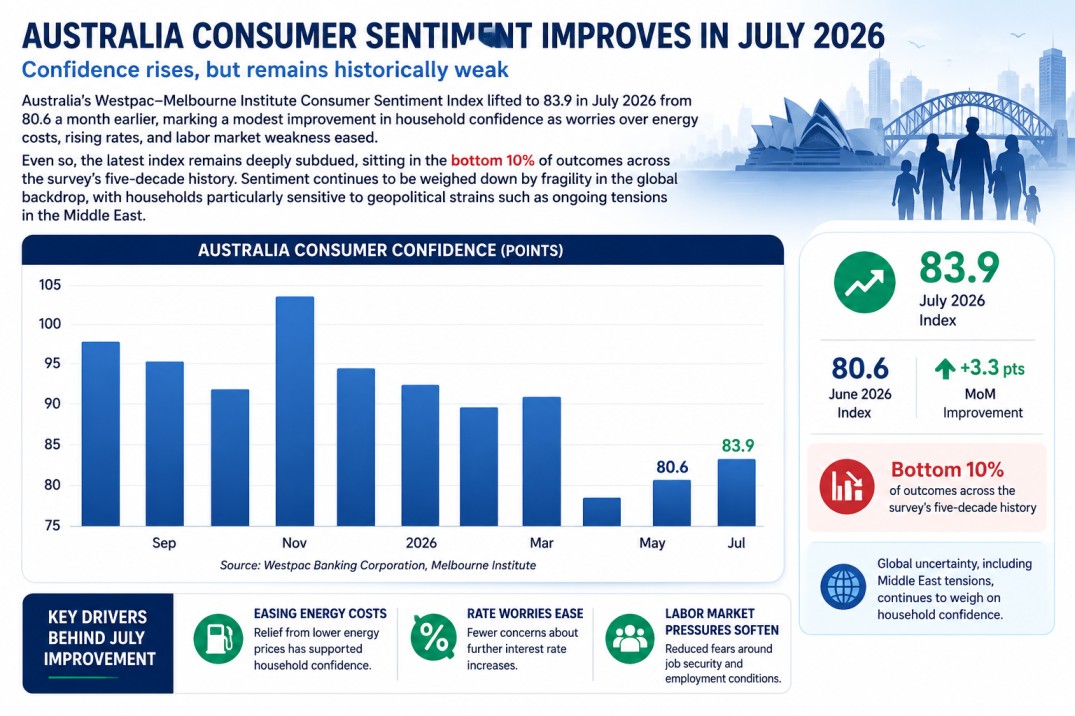
Westpac–Melbourne Institute Consumer Sentiment Index (Source: tradingeconomics)
Mortgage holders also appeared slightly more optimistic after the Reserve Bank of Australia (RBA) decided to keep the official cash rate unchanged in July. Although many Australians still expect borrowing costs to rise further, the proportion of respondents anticipating higher mortgage rates over the next 12 months declined compared with the previous survey.
Despite the improvement, overall consumer confidence remains subdued. Households continue to express concerns about the broader economic outlook, discretionary spending, and their ability to make major purchases. Elevated living costs, higher mortgage repayments, and persistent inflation continue to weigh on consumer sentiment.
Another notable finding from the survey was the weakening outlook for Australia's housing market. Expectations for residential property prices declined further, with fewer consumers expecting home values to increase over the coming year. The house price expectations index fell to its lowest level in approximately three years, highlighting growing caution among prospective buyers and homeowners.
Looking ahead, financial markets will closely monitor Australia's upcoming quarterly inflation data. While the RBA paused its tightening cycle in July, economists continue to suggest that another interest rate increase remains possible if inflation proves more persistent than expected.
For investors, consumer confidence remains an important economic indicator as it influences household spending, retail activity, housing demand, and overall economic growth. Although July's improvement signals some easing in financial stress, sentiment continues to suggest that Australian consumers remain cautious amid ongoing economic uncertainty.