
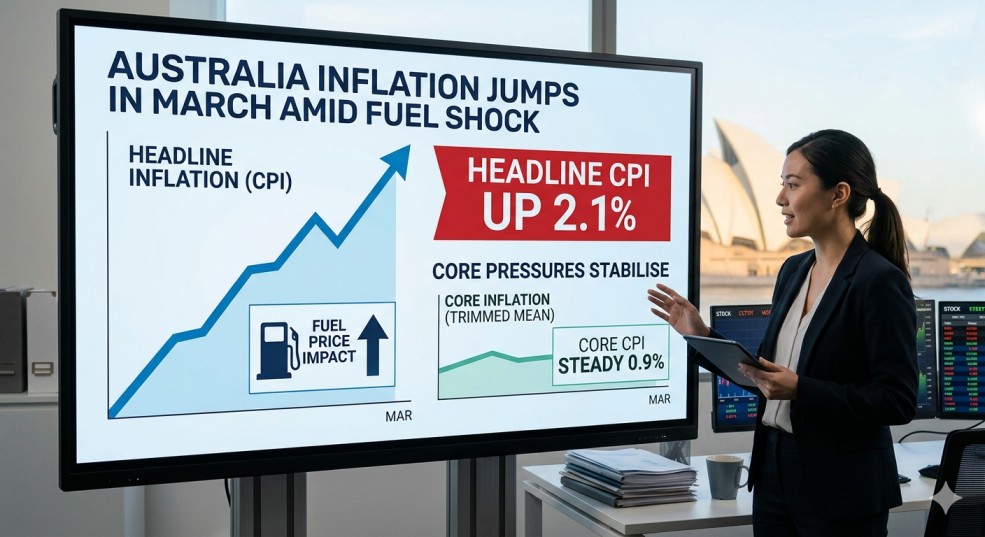
Australia’s inflation rate recorded a sharp uptick in March, largely driven by surging fuel and transportation costs linked to ongoing geopolitical tensions in the Middle East. However, despite the spike, the overall figure came in slightly below market expectations, suggesting some underlying stability in price pressures.
According to data released by the Australian Bureau of Statistics (ABS), the Consumer Price Index (CPI) rose 4.6% year-on-year in March. While this marks a significant increase from the previous quarter’s 3.7%, it fell short of the anticipated 4.8% rise projected by economists.
On a monthly basis, CPI climbed 1.1%, representing one of the strongest increases in recent years. The primary contributor to this surge was transportation costs, particularly fuel prices, which have escalated due to global supply disruptions. These disruptions are closely tied to ongoing geopolitical conflicts in the Middle East, which have impacted oil supply chains and pushed global energy prices higher.
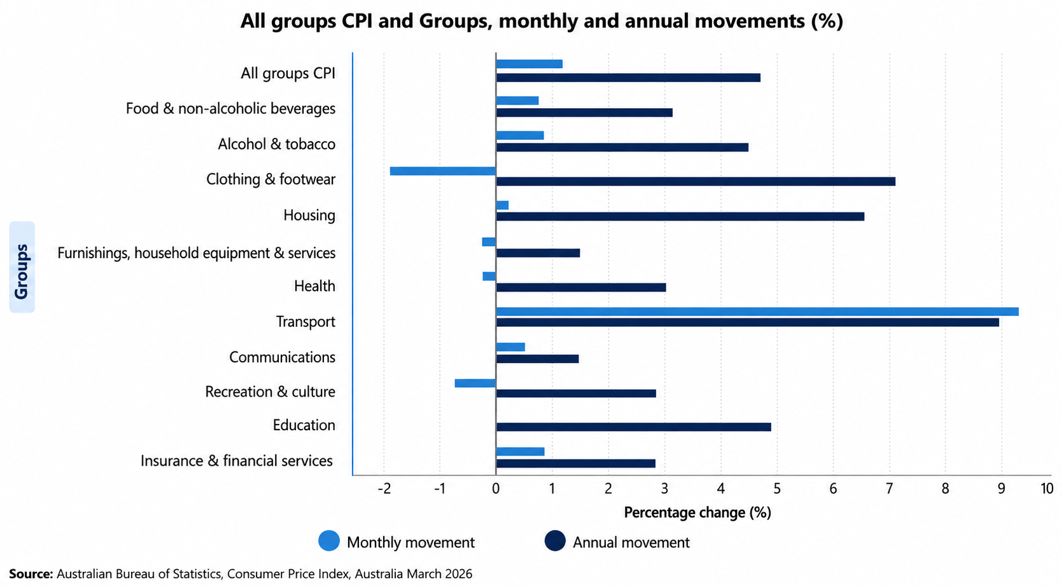
All groups CPI and Groups, monthly and annual movements (%) (Source: Australian Bureau of Statistics)
Housing costs also played a role in driving inflation upward, reflecting continued pressure in the domestic property and rental markets.
Despite the headline inflation increase, core inflation—measured by the trimmed mean CPI—remained unchanged at 3.3%. This indicates that while volatile components like fuel are pushing prices higher, broader inflationary pressures may be stabilising.
The steady core inflation reading comes after the Reserve Bank of Australia (RBA) implemented two interest rate hikes earlier this year in an effort to control inflation. The latest data suggests that these monetary policy actions may be helping to anchor underlying inflation, even as external factors create short-term volatility.
Market participants are now closely watching whether the RBA will maintain its tightening stance or adopt a more cautious approach in upcoming meetings. If core inflation continues to remain stable, policymakers may have room to pause rate hikes despite elevated headline inflation.
In summary, while Australia is currently facing inflationary pressure from global energy markets, the resilience in core inflation provides a cautiously optimistic outlook for the economy in the months ahead.
Disclaimer: Ace Investors Pty Ltd (ABN 70 637 702 188) authorized representative of MF & Co. Asset Management Pty Ltd (AFSL No.520442). Ace Investors has made all efforts to warrant the reliability and accuracy of the views and recommendations articulated in the reports published on its websites. Ace Investors research is based on the information known to us or which was obtained from various sources which we believed to be reliable and accurate to the best of its knowledge. Ace Investors provides only general financial information through its website, reports and newsletters without considering financial needs or investment objectives of any individual user. We strongly advocate that you seek advice, with your financial planner, advisor or stock broker, the merit of each recommendation before acting on any recommendation for their own specific financial circumstances and realize that not all investments will be suitable for all subscribers. To the scope permitted by law, Ace Investors Pty Ltd excludes all liability for any loss or damage arising from the use of this website and any information published (including any indirect or consequential loss, any data loss or data corruption). If the law prohibits this exclusion, Ace Investors Pty Ltd hereby limits its liability, to the scope permitted by law to resupply of the services. The securities and financial products we study and share information on, in our reports, may have a product disclosure statement or other offer document associated with them. You should obtain a copy of these before making any decision about acquiring any security or product. You can refer to our Financial Services Guide.