
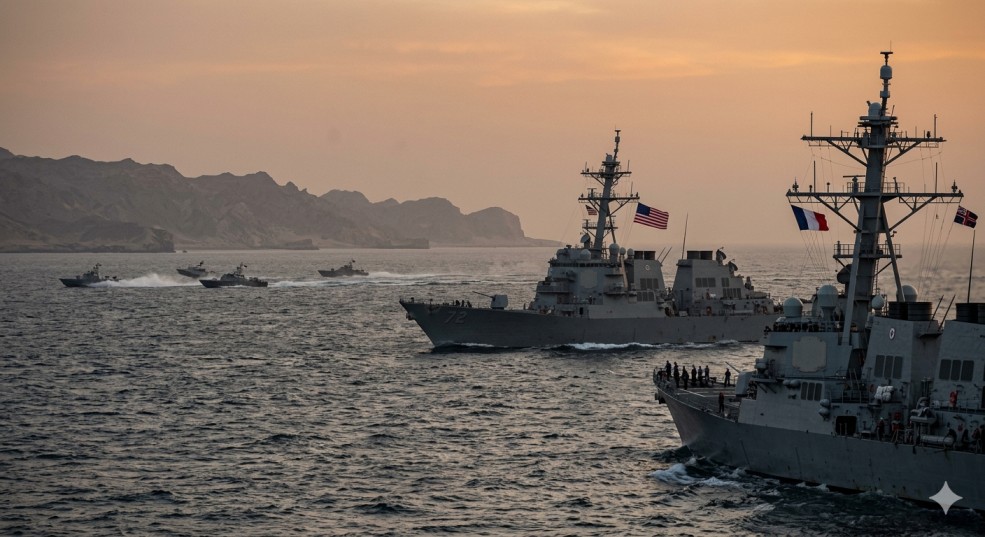
Geopolitical tensions in the Middle East are intensifying after US President Donald Trump urged allied nations to assist in reopening the strategically vital Strait of Hormuz following escalating conflict involving Iran.
According to media reports, the US administration has warned that the future of the North Atlantic Treaty Organization (NATO) could be affected if member nations do not provide support in ensuring safe passage through the crucial oil corridor.
The Strait of Hormuz is one of the world’s most important maritime energy routes, with roughly 20% of global oil supply passing through the channel that connects the Persian Gulf to global markets. Disruptions there have already triggered significant volatility in crude markets.
Oil Prices Surge on Supply Fears
Global oil prices have surged sharply since the conflict intensified. Benchmark crude prices recently climbed to around US$106 per barrel, a roughly 45% jump since hostilities began.
The price spike reflects growing concerns among traders that Iran could continue to disrupt shipping by deploying naval mines, drones, or other asymmetric tactics targeting vessels passing through the narrow shipping lane.
For energy-importing economies—including much of Asia and Europe—the strait remains a critical supply route. Although the United States imports less Gulf oil than many countries, Washington has argued that major beneficiaries of the route should help maintain security along the route.
Calls for International Military Support
Reports suggest the US has requested support from several countries, including European allies and key Asian economies, to contribute naval resources such as minesweepers and patrol vessels. These assets are essential for clearing maritime mines and ensuring safe commercial navigation.
Washington has also suggested that broader international coordination could help prevent further disruptions along Iran’s coastline, where military and paramilitary activity has increased during the conflict.
However, responses from allies have reportedly been mixed, raising questions about the extent of international participation in any coordinated maritime security effort.
Potential Impact on Global Markets
The situation is being closely watched by financial markets, particularly energy traders and investors exposed to commodities and shipping sectors.
For Australian investors, prolonged instability in the Middle East could have several implications:
- Higher oil and energy prices
- Increased volatility in global equity markets
- Potential benefits for energy producers and LNG exporters
- Rising transportation and logistics costs
Australia’s energy companies and commodity exporters could see indirect gains if global energy prices remain elevated, though prolonged geopolitical risk may also create broader economic uncertainty.
China Factor and Diplomatic Tensions
The US has also called on Xi Jinping and China to help stabilise the region. China is one of the largest buyers of Middle Eastern crude and relies heavily on shipments passing through the Strait of Hormuz.
Diplomatic discussions between the two nations were expected to take place soon, though reports suggest the meeting's timeline could change depending on developments in the conflict.
What Investors Should Watch
Investors should monitor several key developments in the coming weeks:
- Security conditions in the Strait of Hormuz
- Oil price movements and energy supply disruptions
- International military participation in maritime operations
- Diplomatic engagement between major global powers
If tensions continue, energy markets may remain highly volatile—creating both risks and opportunities for global investors.
Disclaimer: Ace Investors Pty Ltd (ABN 70 637 702 188), authorised representative of MF & CO. ASSET MANAGEMENT PTY LTD (AFSL No.520442). Ace Investors has made every effort to ensure the reliability and accuracy of the views and recommendations expressed in the reports published on its websites. Ace Investors' research is based on the information known to us or which was obtained from various sources, which we believe to be reliable and accurate to the best of our knowledge. Ace Investors provides only general financial information on its website, in reports, and through newsletters, without considering the economic needs or investment objectives of any individual user. We strongly advocate that you seek advice from your financial planner, advisor, or stockbroker on the merits of each recommendation before acting on any recommendation for your specific financial circumstances, and that you realise not all investments will be suitable for all subscribers. To the scope permitted by law, Ace Investors Pty Ltd excludes all liability for any loss or damage arising from the use of this website and any information published (including any indirect or consequential loss, any data loss or data corruption). If the law prohibits this exclusion, Ace Investors Pty Ltd hereby limits its liability to the scope permitted by law to resupply the services. The securities and financial products we study and share information on, in our reports, may have a product disclosure statement or other offer document associated with them. You should obtain copies of these before making any decision to acquire any security or product. You can refer to our Financial Services Guide.a