
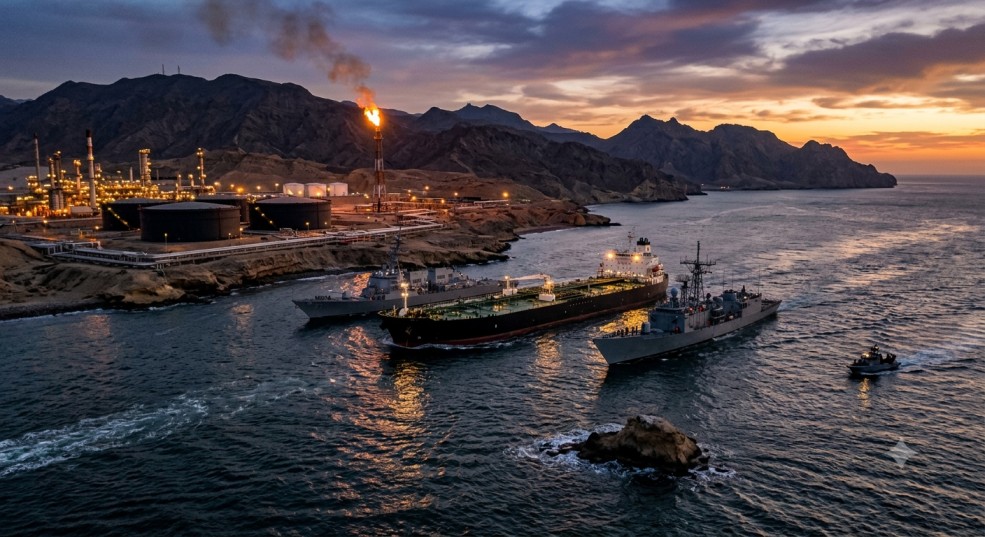
Global oil prices moved sharply higher at the start of the week after escalating tensions between the United States and Iran renewed concerns about the security of energy supplies. According to multiple media reports, Iran announced the closure of the Strait of Hormuz following an intensification of the regional conflict, prompting investors to reassess supply risks across global energy markets.
Brent crude oil prices climbed more than 3% during Asian trading, while West Texas Intermediate (WTI) crude also posted strong gains as traders responded to the heightened geopolitical uncertainty. The latest advance follows a strong rally in the previous week, reflecting growing concerns that the conflict could have broader implications for the global energy market. At the time of writing, light crude oil futures (CLQ2026) has risen 4.38% to US$74.54 per barrel.
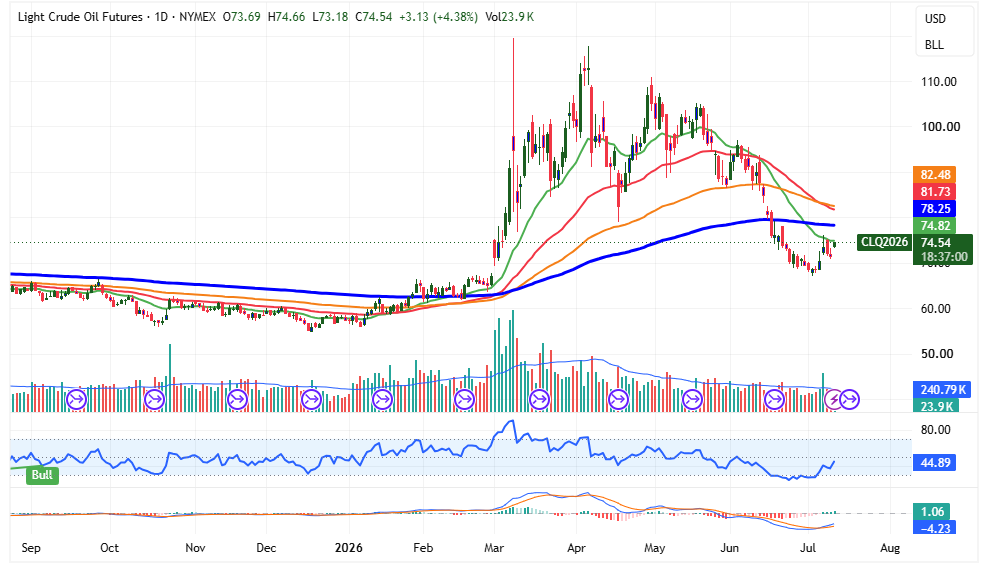
NYMEX- Light Crude Oil Futures (Source: TradingView)
The Strait of Hormuz is one of the world's most strategically important maritime routes, handling a significant share of global crude oil exports from major Gulf producers, including Saudi Arabia, Iraq, Kuwait and the United Arab Emirates. Any disruption to shipping activity through the passage has the potential to tighten global oil supplies and increase transportation and insurance costs for energy shipments.
Media reports indicate that Iran expanded military operations over the weekend, including missile and drone attacks targeting locations in the Gulf region. Tehran subsequently stated that the Strait of Hormuz had been closed after an incident involving a commercial vessel. However, U.S. officials disputed the claim, maintaining that commercial shipping remained operational under U.S. naval protection. Despite these assurances, reports suggest vessel movements through the region slowed considerably, highlighting elevated market caution.
For Australia, higher global crude prices could place upward pressure on domestic fuel prices if the disruption persists. Rising energy costs may also contribute to inflationary pressures, increasing operating expenses for transport, logistics and other energy-intensive industries. Investors will also be monitoring potential impacts on sectors such as airlines, mining and manufacturing, while energy producers could benefit from stronger commodity prices.
Market participants are now closely watching developments in the Middle East, including any coordinated response from major oil-producing nations and the possibility of strategic petroleum reserve releases should supply disruptions become more severe.
Until there is greater clarity on the geopolitical situation, oil markets are likely to remain highly volatile, with prices expected to react quickly to any new developments surrounding the Strait of Hormuz and broader regional tensions.
Disclaimer: Ace Investors Pty Ltd (ABN 70 637 702 188) authorized representative of MF & CO. ASSET MANAGEMENT PTY LTD (AFSL No.520442). Ace Investors has made all efforts to warrant the reliability and accuracy of the views and recommendations articulated in the reports published on its websites. Ace Investors research is based on the information known to us or which was obtained from various sources which we believed to be reliable and accurate to the best of its knowledge. Ace Investors provides only general financial information through its website, reports and newsletters without considering financial needs or investment objectives of any individual user. We strongly advocate that you seek advice, with your financial planner, advisor or stock broker, the merit of each recommendation before acting on any recommendation for their own specific financial circumstances and realize that not all investments will be suitable for all subscribers. To the scope permitted by law, Ace Investors Pty Ltd excludes all liability for any loss or damage arising from the use of this website and any information published (including any indirect or consequential loss, any data loss or data corruption). If the law prohibits this exclusion, Ace Investors Pty Ltd hereby limits its liability, to the scope permitted by law to resupply of the services. The securities and financial products we study and share information on, in our reports, may have a product disclosure statement or other offer document associated with them. You should obtain a copy of these before making any decision about acquiring any security or product. You can refer to our Financial Services Guide.